


"The Colored Museum" is a groundbreaking play by George C. Wolfe that presents a satirical and thought-provoking exploration of African American identity and culture. The play is structured as a series of vignettes, each representing a different exhibit in a fictional museum that showcases the complexities and contradictions of Black life in America.
"The Colored Museum" ultimately serves as both a celebration and critique of African American culture, inviting audiences to reflect on their own perceptions and understanding of Black identity. With its innovative structure and sharp commentary, the play remains a significant work in American theater, encouraging dialogue about race, culture, and representation.

ABOUT
Writer, George C. Wolfe
Director and Producer, Russell M Tyson
_edited.png)


ABOUT GEORGE C. WOLFE
George Costello Wolfe (born September 23, 1954) is an American stage and screen director, playwright and producer. His accolades include two Tony Awards for directing the play Angels in America: Millennium Approaches and the musical Bring in 'da Noise/Bring in 'da Funk. He served as Artistic Director of The Public Theater from 1993 until 2004.
Among Wolfe's first major offerings—the musical Paradise (1985) and his play The Colored Museum (1986)—were off-Broadway productions that met with mixed reviews. In 1990, however, Wolfe won an Obie Award for a best off-Broadway director for his play Spunk, an adaptation of three stories by Zora Neale Hurston.
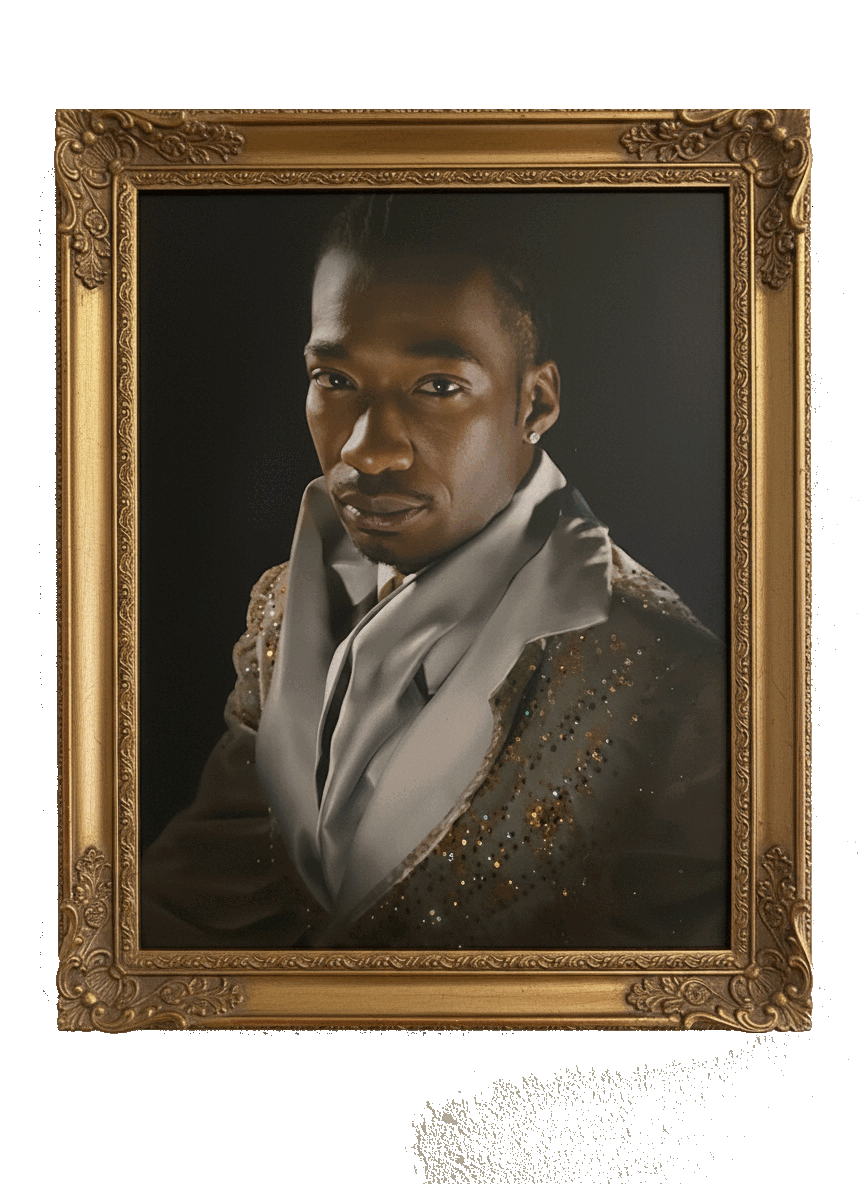
ABOUT Russell M. Tyson
Known for his creative twist, controversial boldness, and awareness through entertainment! Russell M Tyson is a native of Atlanta, Georgia, educated through the streets and Atlanta Public School System. That is the path consigned with his company mission: To encourage, expose and educate through entertainment.
In comparison, W. E. Dubois's republication of the idea of the leadership class within the African American community in 1903. We began to analyze the notion of the prominent action of Russell M Tyson, which led us to acknowledge him as the modern-day educator of the Arts, as W. E. DuBois spoke of in his essay, Russell leads today as one of today's "Talented Tenth," in the Performance Arts.
Russell was introduced to the Arts as a very young lad. In areas of singing, acting, dancing, modeling, directing, and producing. Mainly through school, church, and community. Through humbleness and those who saw within him, Russell was passed as a torch. A torch that is the beacon for the African American community. This torch host the xenodochy of all walk to bring respect, unity, and comfort that removed the lies and deception that has been taught to the community.

"The Colored Museum" is a groundbreaking play by George C. Wolfe that presents a satirical and thought-provoking exploration of African American identity and culture. The play is structured as a series of vignettes, each representing a different exhibit in a fictional museum that showcases the complexities and contradictions of Black life in America.
"The Colored Museum" ultimately serves as both a celebration and critique of African American culture, inviting audiences to reflect on their own perceptions and understanding of Black identity. With its innovative structure and sharp commentary, the play remains a significant work in American theater, encouraging dialogue about race, culture, and representation.


